February 12, 2026
Benefits and Examples of Digital Transformation in Manufacturing
Digital transformation in manufacturing is reshaping operations, boosting efficiency, reducing downtime, and ensuring consistent quality across industries. Explore its real-world applications and learn how it drives measurable success.
Manufacturing leaders continue to manage a familiar set of pressures that affect performance, quality, and profitability.
Paper-based workflows, fragmented systems, and manual handoffs still introduce errors, delays, and blind spots across production and operations.
When processes remain disconnected, data stays siloed across departments, limiting collaboration between operations, engineering, IT, and leadership.
At the same time, intensifying global competition, rising expectations for customization, and increasingly volatile supply chains demand faster, more informed decision-making at every level of the organization.
Digital transformation in manufacturing addresses these realities directly. It provides manufacturers with practical tools and structured approaches to enhance visibility, stabilize operations, and achieve measurable improvements in efficiency, quality, and throughput.
What Is Digital Transformation in Manufacturing
Digital transformation in manufacturing refers to the shift from paper-based, disconnected processes to integrated, data-driven operations.
It connects planning, production, material movement, and service functions through technologies such as IoT, AI, analytics platforms, and cloud-based systems.
The meaning of smart manufacturing becomes clear on the plant floor, where real-time data replaces manual reporting, automated workflows reduce variability, and connected manufacturing systems link machines, operators, and enterprise platforms.
These systems enable manufacturers to capture accurate production data, respond more quickly to issues, and coordinate activities across departments.
A practical definition of digital transformation in manufacturing centers on outcomes.
Digital transformation in manufacturing enables better resource utilization, reduced waste, improved decision-making, and more consistent execution.
As digitalization trends in manufacturing continue to accelerate, connected manufacturing systems increasingly define how competitive plants operate.
Why Digital Transformation Matters in Manufacturing

Manufacturers face growing pressure from suppliers, customers, and internal operations.
Workforce shortages, supply chain volatility, and rising customer expectations have made adaptability a baseline requirement rather than a competitive advantage.
How Digital Transformation Helps Address Industry Challenges
- Competitive Pressures: Manufacturers are expected to deliver greater customization with shorter lead times. Manufacturing digitalization trends show that digital tools help standardize processes, increase flexibility, and reduce production cycle times, strengthening competitive positioning.
- Supply Chain Challenges: Industry 4.0 challenges are often most visible in inventory and logistics. Digital systems enhance visibility across materials and production flows, enabling faster responses to shortages, delays, and demand fluctuations.
- Labor Challenges: Skilled labor shortages continue to impact operations. Digital transformation reduces reliance on manual tasks, improves process consistency, and allows teams to accomplish more with existing resources.
- Agility and Real-Time Decision-Making: Manufacturing competitiveness technology enables real-time monitoring of performance, quality, and costs. When accurate data is available at the right time, teams can make informed decisions that stabilize operations and protect margins.
- Impact on Business Outcomes: Manufacturers adopting digital transformation consistently report lower operating costs, faster production cycles, and improved product quality. These improvements translate directly into profitability, responsiveness, and customer confidence.
As manufacturing faces increasing competitive and market pressure, digital transformation plays a central role in enabling faster, more coordinated adaptation that directly improves throughput, quality, and responsiveness.
Transformation in Action on the Plant Floor
Modern production environments face rising strain.
Teams must move faster, hold tighter tolerances, and respond to volatile customer and supply chain demands while relying on systems not built for this level of complexity.
These pressures turn into bottlenecks that drive rework, downtime, and constant effort just to keep output on track.
As the gap widens between business expectations and what daily operations can support, manufacturers rely on clearer insight, faster coordination, and more consistent performance.
The examples that follow show how modern practices can reshape work closest to production and give teams the stability and responsiveness needed to compete.
Digital Transformation in Action
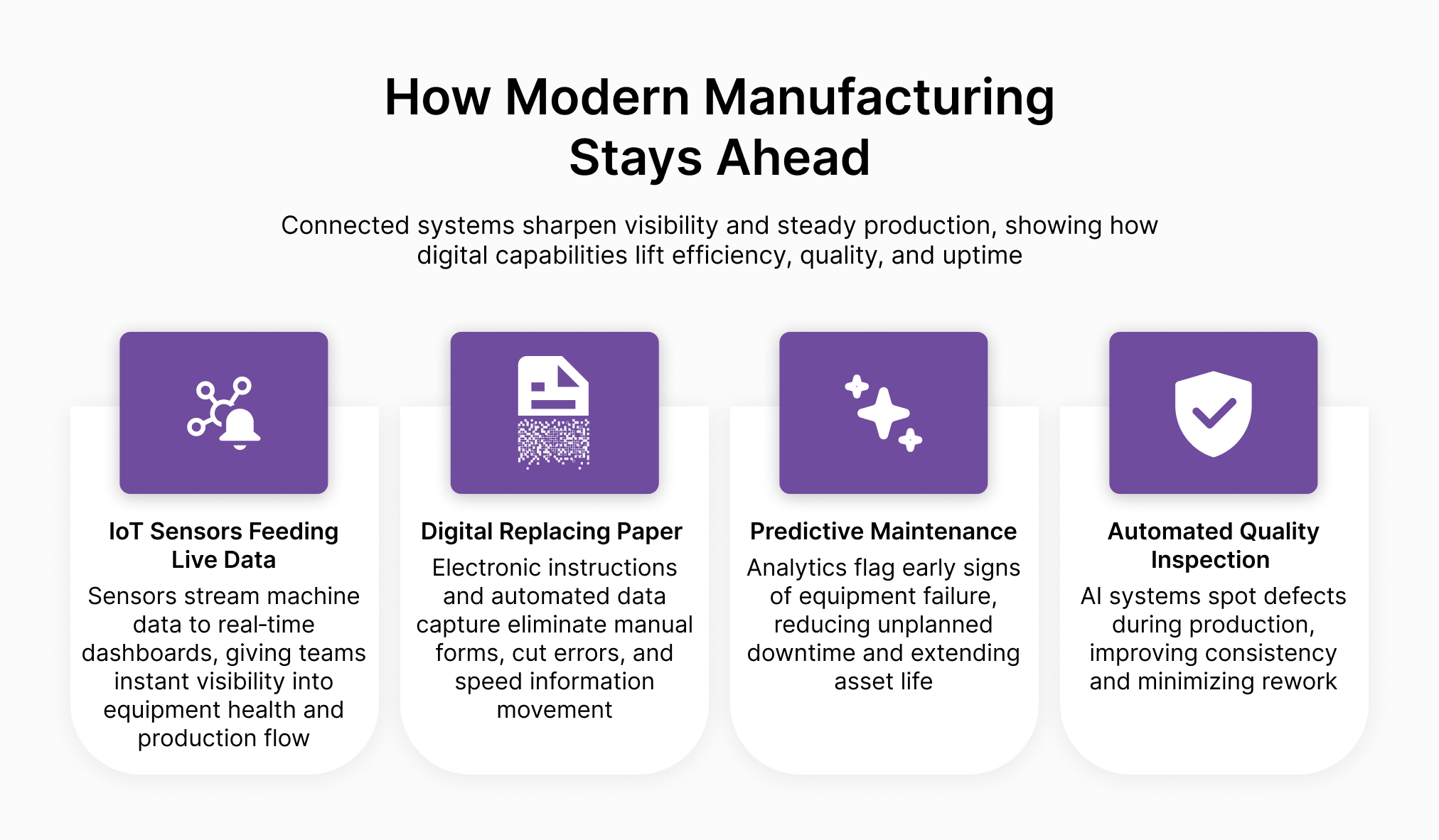
Together, these capabilities demonstrate why digital transformation matters in manufacturing.
Manufacturing digitalization trends show that plants using manufacturing competitiveness technology achieve more stable operations and higher output reliability.
Benefits of Digital Transformation in Manufacturing for Various Stakeholders
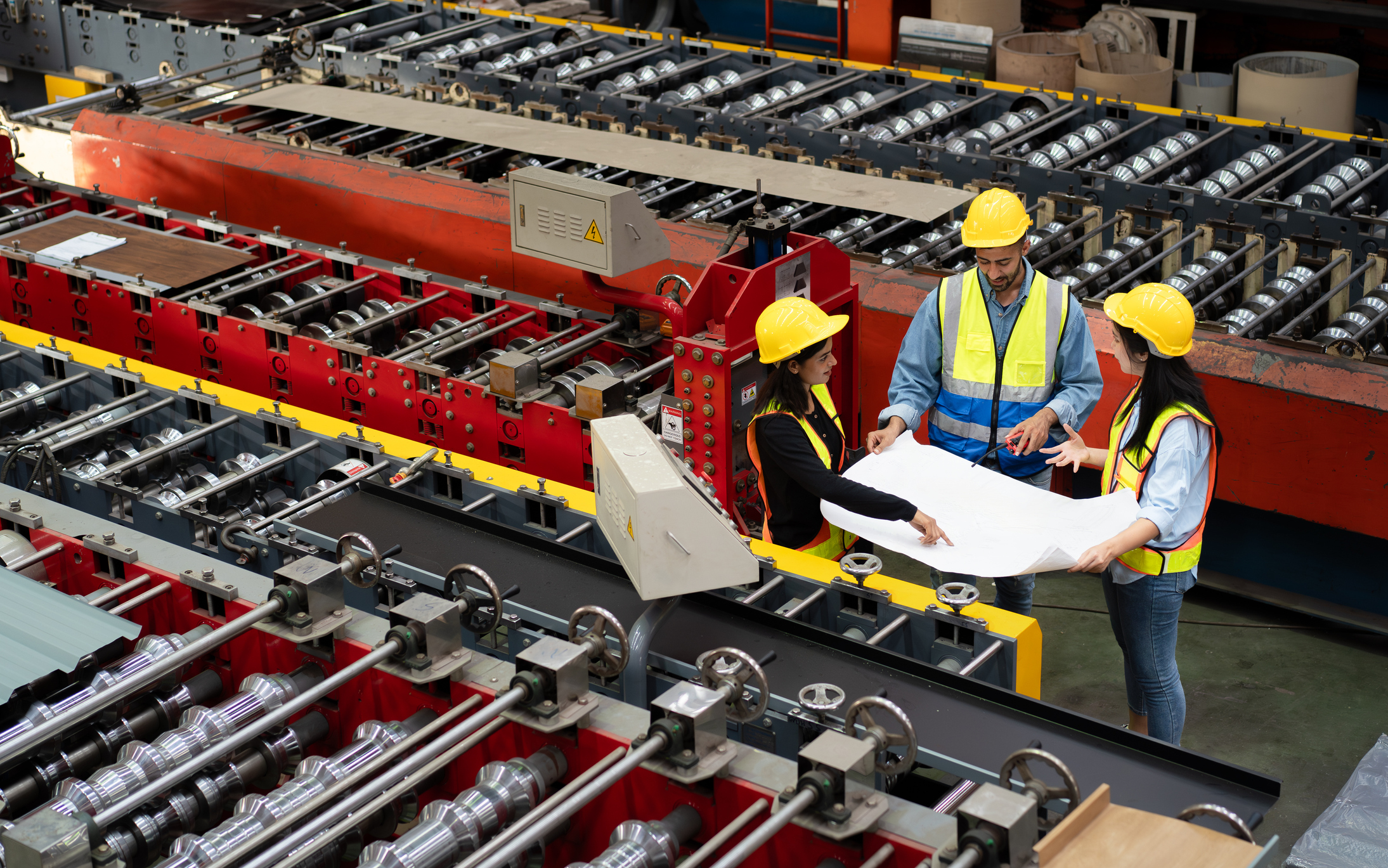
Digital transformation reshapes how work gets done across the organization, not just on the plant floor.
When data moves freely, and systems operate in sync, every role gains the clarity and control needed to make better decisions.
Operators see issues sooner, managers understand performance in real time, and leaders can plan with confidence.
These improvements compound, strengthening both day‑to‑day execution and long‑term competitiveness.
Smart Manufacturing Benefits
- Operators: Operators receive clearer guidance, fewer manual tasks, and faster issue resolution through real-time insights and automated workflows.
- Plant Managers: Plant managers gain continuous visibility into throughput, quality, and asset performance. This enables faster adjustments, reduced waste, and measurable improvements in digital manufacturing ROI.
- IT and Business Leaders: Unified data sources and enterprise-level analytics support planning, system integration, and scalable digital initiatives.
- Customers: Improved quality control and production reliability lead to higher product quality and more consistent on-time delivery.
Across the organization, smart manufacturing benefits reinforce efficiency, cost control, and measurable returns.
Manufacturing Digital Transformation Use Cases
Digital transformation delivers practical improvements across multiple stages of production.
The following use cases highlight how predictive maintenance, quality analytics, and adaptive scheduling improve efficiency and competitiveness in manufacturing environments.
Practical Applications of Digital Transformation in Manufacturing
Predictive Maintenance: By using sensors and AI-driven analytics, manufacturers can identify early signs of equipment failure and schedule maintenance proactively. This predictive maintenance approach reduces unplanned downtime and improves equipment reliability.
Research published in MDPI Electronics shows that AI-enabled predictive maintenance significantly reduces equipment failure rates and operational downtime in manufacturing environments (MDPI, 2023).
- Quality Analytics: AI-powered quality control systems perform real-time quality checks, identifying defects faster and more consistently than manual inspection. This improves production accuracy and reduces rework.
Trehan (2023) highlights how AI-based quality monitoring enhances data accuracy and defect detection, leading to more consistent product quality. - Supply Chain Visibility: Digital systems track materials, parts, and finished goods in real time across the supply chain. This improves inventory accuracy, reduces delays, and enables more reliable delivery timelines.
Research by de Vries (2023) shows that real-time inventory tracking enhances supply chain visibility, optimizes stock levels, and helps ensure timely delivery. - Adaptive Scheduling: Digital tools enable dynamic production scheduling based on real-time conditions. When materials are delayed or demand shifts unexpectedly, adaptive scheduling helps maintain alignment and minimize disruption.
Research by Mourtzis et al. (2020) demonstrates that cloud-based, real-time adaptive scheduling improves flexibility and responsiveness by dynamically adjusting production plans when material availability, machine capacity, or demand conditions change.
Together, these use cases demonstrate how digital transformation improves operational resilience, efficiency, and agility.
Operational Technology (OT) in Digital Transformation Manufacturing
As manufacturers connect equipment and systems, OT and IT convergence becomes central to digital transformation in manufacturing.
The focus remains on operational continuity, visibility, and controlled data flows rather than isolated cybersecurity initiatives.
Key Considerations for OT and IT Convergence
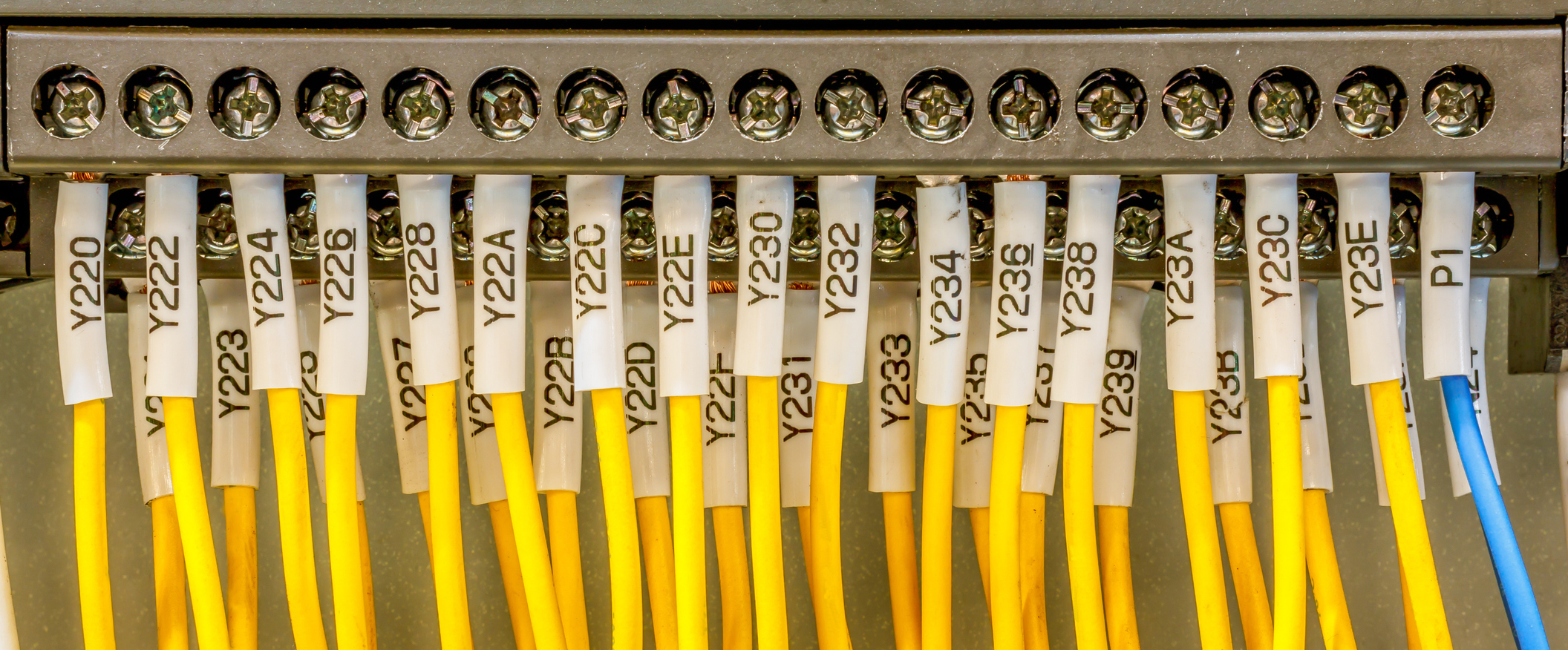
- Enhanced Productivity: Connected OT and IT systems provide real-time visibility across operations, supporting secure and efficient smart manufacturing environments.
- Operational Safety and Data Flows: Industrial cybersecurity best practices protect uptime and intellectual property while minimizing disruption to production processes.
- Predictive Analytics: Predictive analytics aligned with IT and OT convergence help identify operational risks early and improve asset reliability.
- Legacy Integration and Remote Access: Connecting legacy systems and enabling controlled remote access expands operational visibility while preserving plant stability.
Research by Dmitry. Ivanov (2020) indicates that predictive analytics and real-time monitoring reduce operational risk in manufacturing by identifying issues before they affect production.
Common Digital Transformation Manufacturing Myths vs. Facts
As digital transformation advances across manufacturing, separating reality from misconception becomes essential.
Digital transformation manufacturing myths, and smart manufacturing misconceptions can slow adoption, while Industry 4.0 myths often overstate cost, risk, or complexity.
Focusing on digital manufacturing facts helps manufacturers adopt technology more effectively and drive measurable results.
✗ Myth: Digital transformation is only for large manufacturers
✓ Reality: Manufacturers of all sizes can benefit
✗ Myth: It’s all about buying new technology
✓ Reality: It’s a process‑driven change that improves how operations run
✗ Myth: It disrupts operations
✓ Reality: With proper planning, it stabilizes performance and improves efficiency
✗ Myth: It’s an IT project
✓ Reality: It requires collaboration across engineering, operations, and IT
✗ Myth: It’s too expensive and time‑consuming
✓ Reality: Scalable solutions offer quick wins and measurable ROI
✗ Myth: Digital transformation is only about automation
✓ Reality: It connects processes, improves visibility, and enables data‑driven decisions
✗ Myth: Smart manufacturing is only for high‑tech industries
✓ Reality: Manufacturers across all sectors can benefit, regardless of complexity
✗ Myth: Industry 4.0 is too complex to implement
✓ Reality: A phased approach makes adoption manageable
✗ Myth: Digital transformation will replace human workers
✓ Reality: It enhances human roles by reducing repetitive manual work
✗ Myth: It’s only for manufacturers with advanced IT systems
✓ Reality: Transformation can begin with incremental steps, even in legacy environments
Dispelling digital transformation manufacturing myths allows manufacturers to move forward with greater confidence.
Digital manufacturing facts show that a practical, phased approach can improve efficiency, resilience, and competitiveness across operations.
How to Start Digital Transformation in Manufacturing
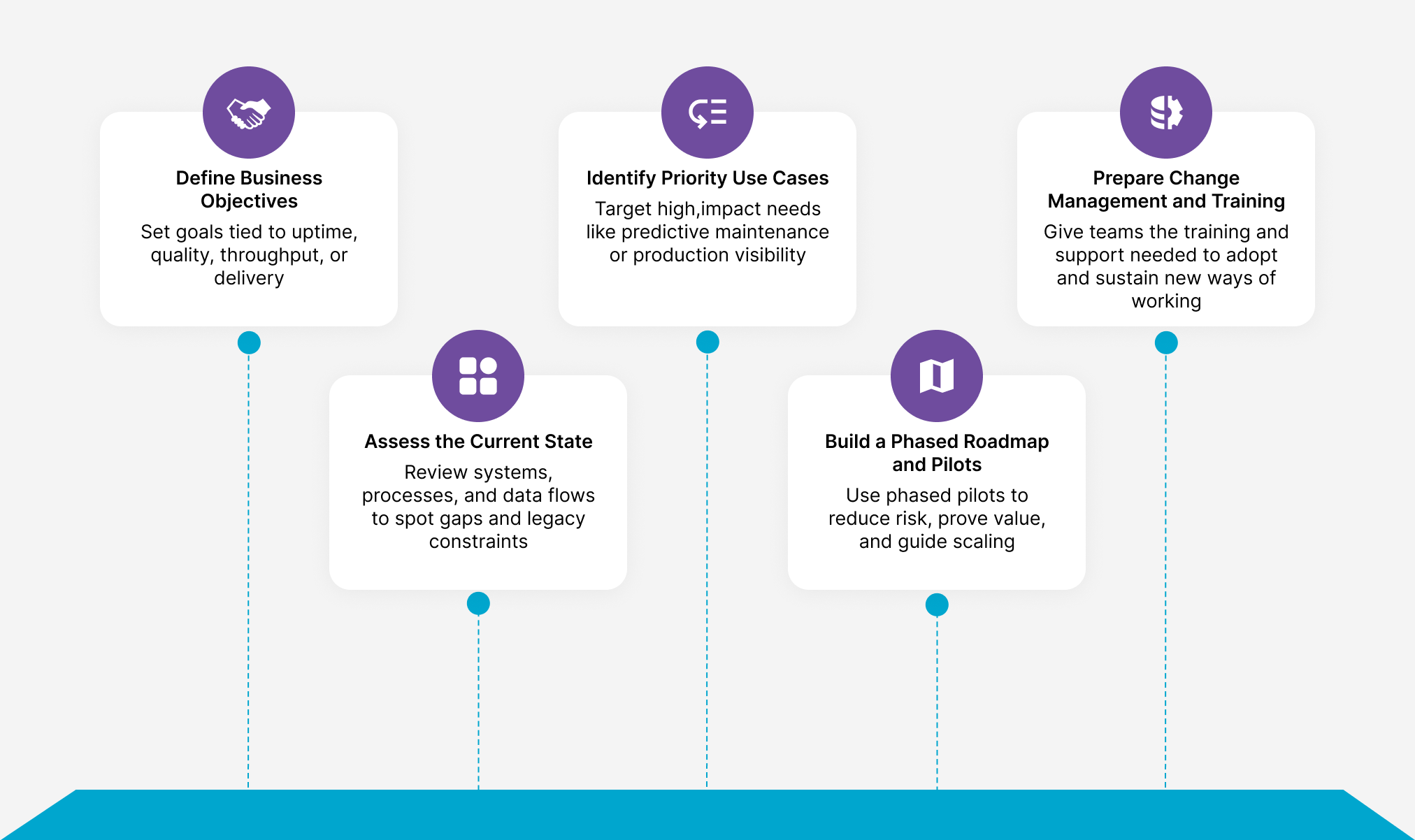
Meaningful transformation requires more than new technology. It depends on shared priorities, a realistic view of current processes, and a plan that builds momentum through early wins.
When teams align around clear objectives and focus on the use cases that matter most, they lay the foundation for smarter decisions, smoother adoption, and steady progress toward a connected, data‑driven operation.
A clear roadmap supports effective smart manufacturing implementation and a sustainable Industry 4.0 adoption strategy.
Let’s talk about how the DX Accelerator™ turns uncertainty into a phased roadmap you can trust.
Measuring Smart Manufacturing Success
Digital transformation must prove its value through measurable results. Tracking the right KPIs helps manufacturers understand how digital tools influence output, quality, cost, and customer experience.
These metrics create accountability, guide investment decisions, and ensure that smart manufacturing efforts translate into meaningful operational and financial gains.
- Machine Utilization Rates - Improved visibility into runtime, changeovers, and idle time helps identify bottlenecks and increase output without adding capacity.
- First-Pass Quality - Tracking first-pass quality shows how consistently processes stay in control. Digital quality data enables earlier detection of variation, reducing rework and scrap.
- On-Time Delivery - On-time delivery reflects alignment across production, scheduling, and supply chains. Real-time visibility supports faster adjustments and more reliable commitments.
- Downtime Reduction - Monitoring unplanned downtime alongside predictive maintenance data helps shift maintenance from reactive to planned, improving equipment availability.
- Operational Costs - Labor efficiency, scrap, energy use, and maintenance costs provide a clear view of digital manufacturing ROI and operational performance.
- Customer Satisfaction - Consistent quality and reliable delivery directly influence customer satisfaction and reinforce the business value of digital transformation.
Together, these digital transformation manufacturing KPIs ensure that smart manufacturing investments deliver measurable operational results.
Turning Strategy into Execution
Digital transformation in manufacturing continues to reshape how plants operate, compete, and grow.
Manufacturers that connect systems, standardize processes, and use data effectively position themselves for long-term operational stability and performance improvement.
Many organizations benefit from structured frameworks that translate ambition into execution.
Approaches such as DX Accelerator™ by EOSYS reflect how manufacturers align stakeholders, define value, and build actionable roadmaps before investing in technology.
For organizations ready to take the next step, contact EOSYS for a transformation roadmap assessment and learn how manufacturing operations can achieve measurable improvements through digital transformation.
Frequently Asked Questions About Starting Digital Transformation
Start by defining business objectives and assessing current operations.
Timelines vary based on scope and goals. Many manufacturers start with pilot projects and scale from there.
Digital transformation involves both process change and technology adoption.
Legacy systems can be integrated into transformation initiatives while preserving existing investments.
ROI typically appears through improved efficiency, reduced costs, higher quality, and enhanced customer satisfaction.