May 12, 2026
Manufacturing Process Automation: Practical Roadmap
A step-by-step guide to aligning people, processes, and systems for efficient, scalable manufacturing automation.
Most production leaders face pressure from every direction. Throughput targets increase, quality standards tighten, experienced operators retire, and you need full batch traceability.
At the same time, many facilities still rely on aging controls, manual logs, and long-standing workarounds.
In this environment, automation must match production conditions. Automation initiatives fail when system behavior on the plant floor does not match project assumptions.
Manufacturers pursue process automation to improve consistency, throughput, and visibility. Yet many initiatives stall because teams prioritize hardware or software before understanding how work actually flows.
Automation delivers measurable impact when people, processes, and systems align with the realities of the plant floor.
What Manufacturing Process Automation Means
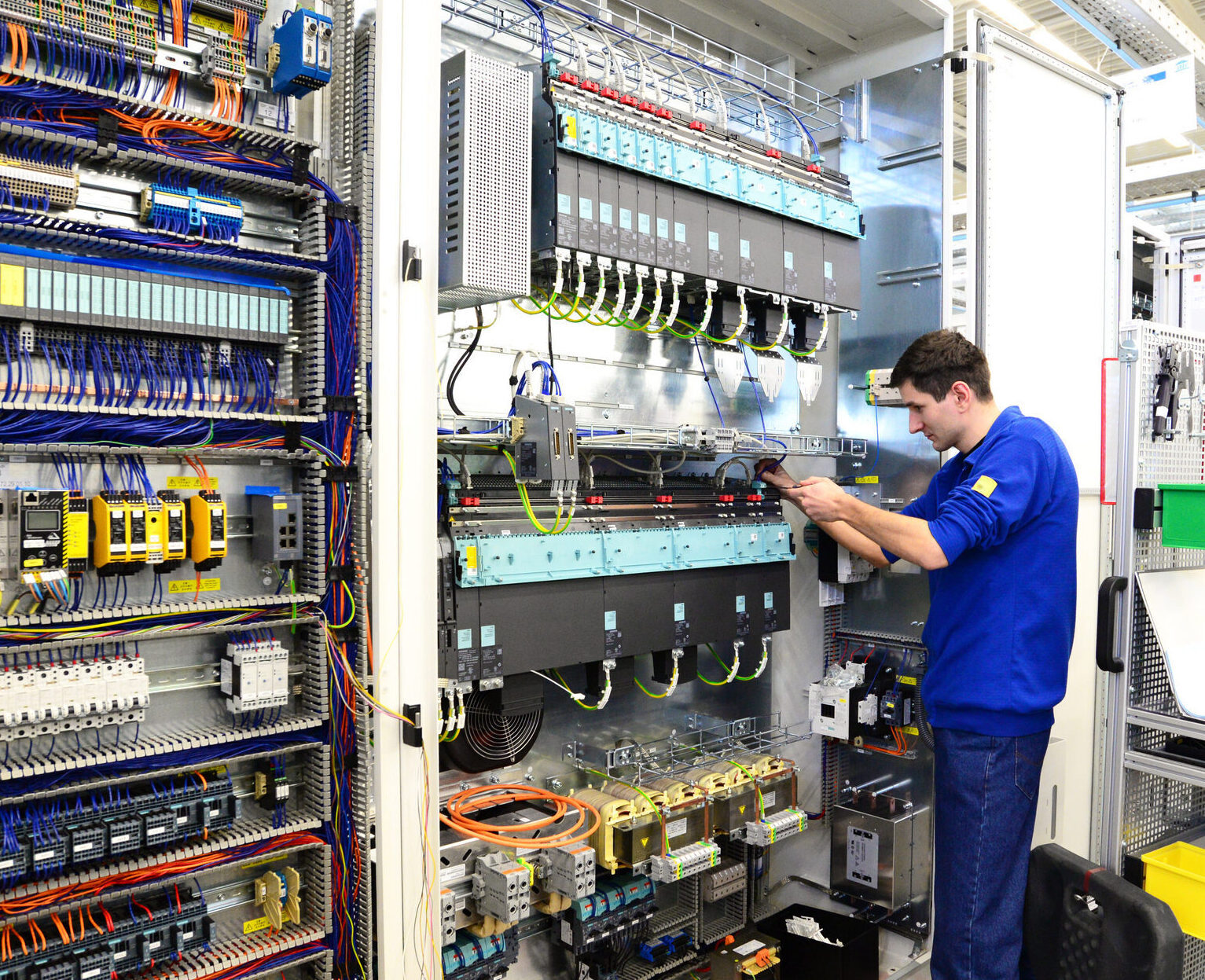
Automation coordinates machines, control systems, and data to keep production running in sync. It reduces manual intervention by linking control logic, information flow, and operational decision-making across the plant.
Digitization converts analog or paper records into digital data. Optimization uses that data to improve efficiency, quality, or throughput. For example, PLCs operate machinery, SCADA provides monitoring, and MES manages scheduling and quality execution.
Clear definitions are essential. Confusing digitization or optimization with automation leads to stalled projects, wasted investment, and operator frustration. Understanding what automation entails ensures systems enhance operations rather than introduce new variability.
Comparison Table: Automation vs Digitization vs Optimization
To understand how automation fits within broader operational improvement efforts, the table below outlines differences in focus, execution, and outcomes.
| Focus | Description | Example | Key Benefits |
|---|---|---|---|
| Automation | Executes tasks with minimal human input by integrating control and data | PLC controlling an assembly line, SCADA monitoring, MES scheduling | Consistent output, fewer errors, faster response, improved traceability |
| Digitization | Converts analog or paper data into digital format | Digital logbooks, sensors, electronic checklists | Data availability, historical records, foundation for analytics |
| Optimization | Improves efficiency or quality by analyzing existing processes | Scheduling software, energy analysis, process simulation | Higher throughput, lower costs, better decision-making without full automation |
Automation links control, information, and decision flows, enabling coordinated system response.
Well-architected manufacturing automation systems enhance output consistency, reduce variability, and provide actionable data. Over time, they support predictive analytics, advanced scheduling, and scalable growth.
Why Manufacturers Pursue Process Automation
Plants rarely pursue automation because it is trendy. They adopt it when manual processes and fragmented systems no longer support business objectives.
Automation stabilizes performance and improves visibility across operations. It reduces errors from manual handling and shift changes. It also addresses labor constraints and skill gaps by immersing consistency into system design.
Real-time data improves decision quality and speed. Integrated systems strengthen compliance and traceability, enabling scalability as demand changes.
When aligned with defined operational objectives, automation becomes a strategic initiative that delivers measurable gains and continuous improvement.
Core Components of Manufacturing Process Automation
Effective industrial process automation relies on structured, multi-layer architecture. Each layer serves a distinct purpose. All must operate in coordination to deliver stability, visibility, and scalability.
 | 1. Control Layer PLCs manage machinery, motion control, and sequencing logic. Safety systems operate at the device level. Real-time control logic ensures repeatable, deterministic plant-floor performance. |
 | 2. Supervisory Layer SCADA and HMI systems provide monitoring and operator interaction. Alarm management, historians, and dashboards enhance visibility and structured data capture. |
 | 3. Manufacturing Operations Layer MES integration coordinates scheduling, quality management, and production genealogy. It connects production units and supports electronic recordkeeping for regulatory and customer requirements. |
 | 4. Enterprise Integration Layer ERP connectivity links operations with inventory, procurement, and planning systems. Standardized data exchange matches production with business strategy. |
 | 5. Data, Network, and Cybersecurity Foundations Resilient industrial networks, secure data architecture, and defined governance policies nurture reliable automation. Cybersecurity practices aligned with the NIST Cybersecurity Framework help ensure OT and IT systems operate securely and cohesively. Aligned layers create a stable automation foundation. When control, visibility, and integration work together, manufacturers gain a scalable, secure platform for long-term operational performance. |
Manufacturing Process Automation Use Cases
No two plants automate for the same reason. Automation delivers measurable results when it addresses specific production constraints.
In discrete industries such as automotive and industrial equipment, the focus is on synchronizing robot cells and assembly lines. In regulated environments like food and chemical manufacturing, attention shifts to recipe control and batch consistency. As operational demands evolve, other sectors prioritize packaging throughput, inspection, traceability, or utility monitoring.
1. Discrete Manufacturing Process Control
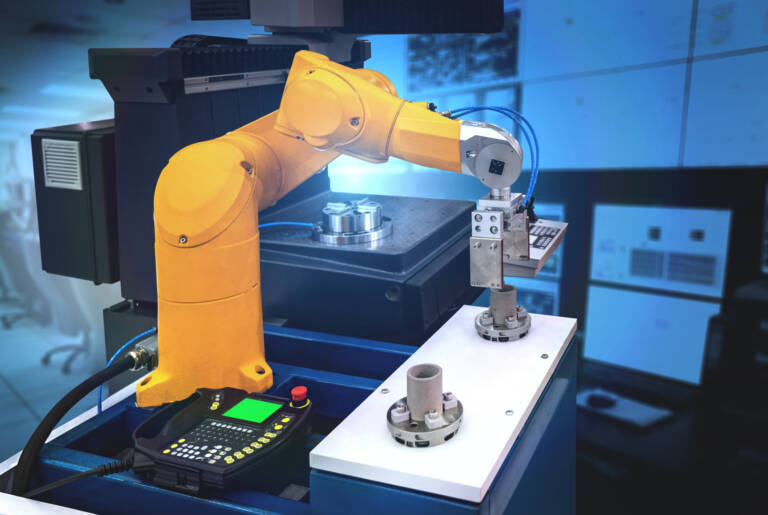
Automation in discrete manufacturing coordinates motion, logic, and synchronization of individual machines.
It connects robot cells, fixtures, and test stations into unified workflows, reducing variation and supporting flexible production.
Primary Industries: Automotive, Defense, Industrial Equipment
Core Automation Capabilities
- Cell-level automation of robotic or operator-driven work cells
- Line synchronization across assembly, welding, fastening, and test stations
- Unified PLC and HMI standards enabling multi-line reuse and scaling
- Integration of robotics, safety systems, and vision into a single control framework
Common Triggers
- High product mix causing inconsistent yields
- Manual handoffs creating bottlenecks
- Operator or shift variability affecting quality
2. Batch and Continuous Process Automation
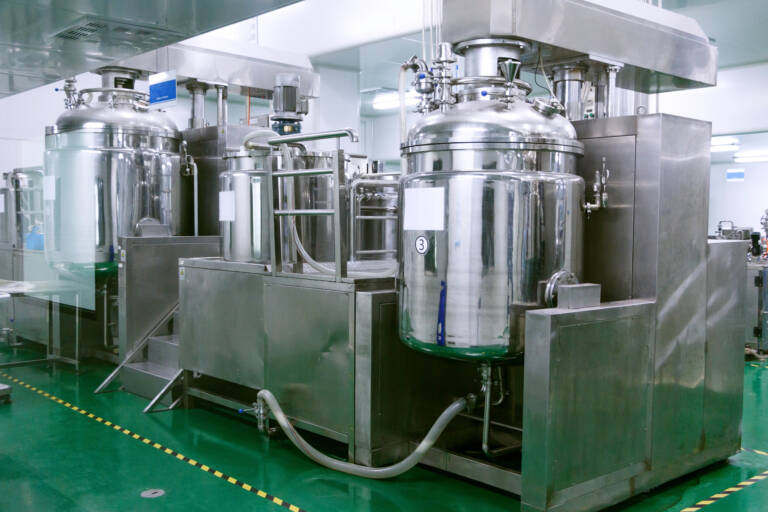
Used in Food & Beverage, Chemical, and regulated manufacturing, batch automation ensures repeatable recipes and precise control of material flows, standards echoed in FDA manufacturing regulations for human food.
Primary Industries: Food & Beverage, Chemical, Regulated Manufacturing
Core Automation Capabilities
- Recipe-driven control and state-based sequencing
- Skid-based automation integrated into plant-wide control
- Batch data collection with historian integration
- Alarm management and deviation tracking for compliance readiness
Common Triggers
- Inconsistent batch quality or yield
- Manual recipe changes or paper-based recordkeeping
- Increasing regulatory or audit pressure
3. Packaging and Material Handling Automation
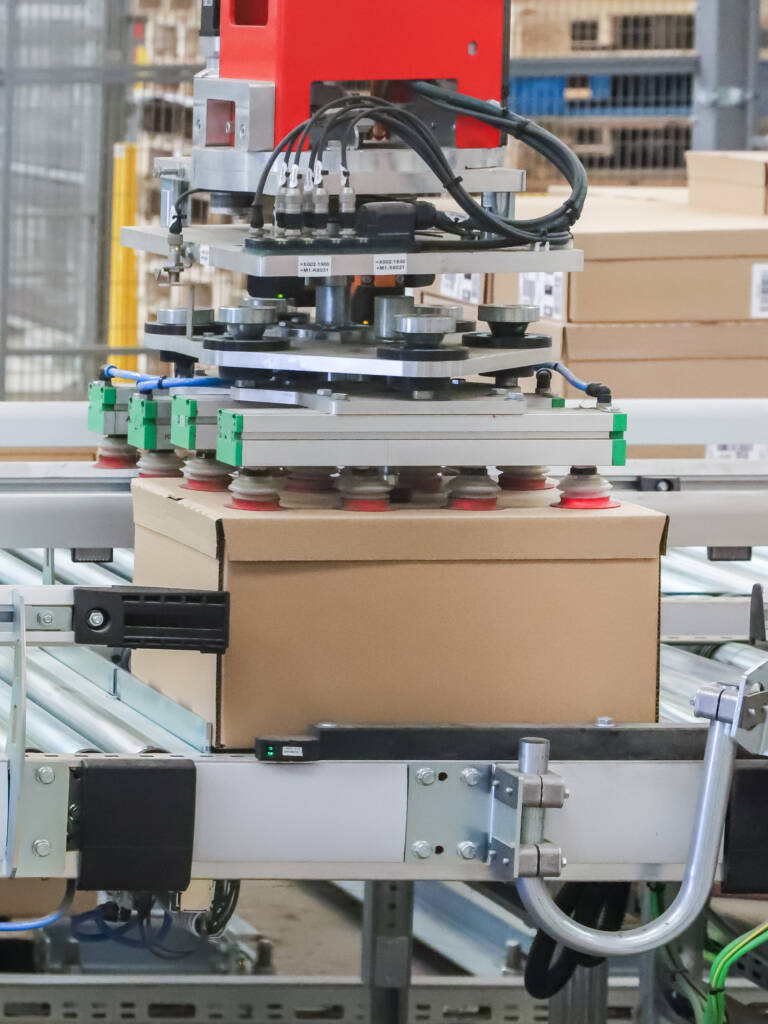
End-of-line automation addresses throughput and labor limitations.
Coordination between conveyors, robotics, and AGVs ensures continuous material flow (National Institute of Standards and Technology).
Primary Industries: Consumer Products, Automotive, General Manufacturing
Core Automation Capabilities
- End-of-line automation for packaging and palletizing
- Integration of packaging equipment with upstream production controls
- Conveyor systems and robotic handling
- AGV/AMR coordination within production and warehouse
Common Triggers
- Labor shortages or ergonomic risks
- Packaging bottlenecks reducing throughput
- Limited visibility into packaging efficiency
4. Quality Inspection and Traceability
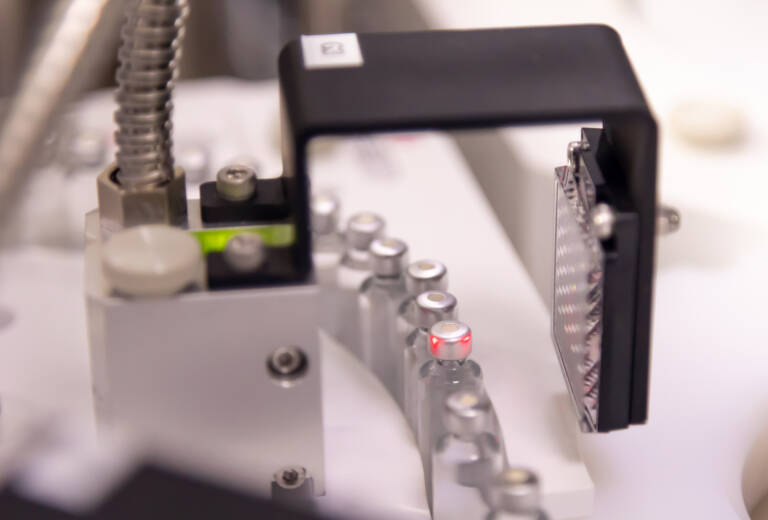
Automated inspection reduces scrap and rework. Vision systems and integrated test stations ensure serial- and lot-level traceability across processes.
Primary Industries: Defense, Automotive, Medical, High-Reliability Manufacturing
Core Automation Capabilities
- In-line inspection integrated with process steps
- Vision systems and automated testing tied to control logic
- Serial- and lot-level traceability across materials
- Automatic pass/fail routing and exception handling
Common Triggers
- Customer or regulatory traceability requirements
- High rework or scrap rates
- Manual inspection slowing throughput
5. Energy and Utility Monitoring
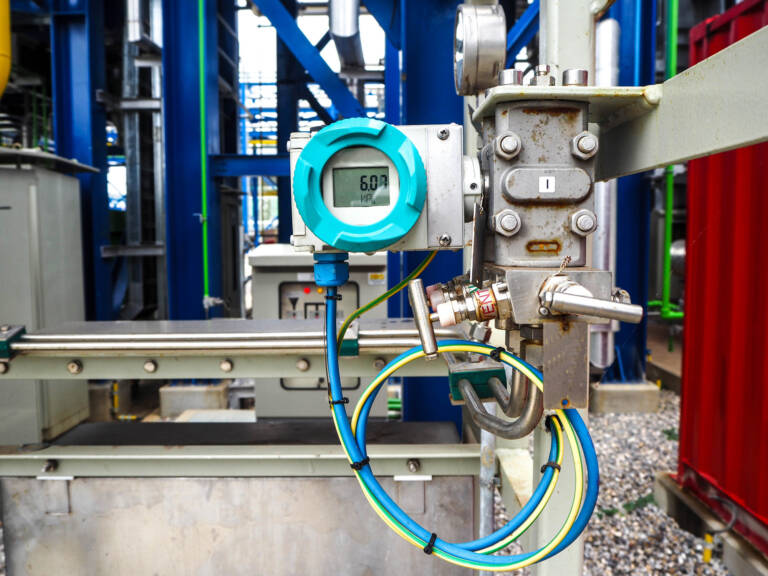
Automation monitors electrical, compressed air, water, steam, and other utilities to improve efficiency and support ESG initiatives.
Primary Industries: Cross-Industry / ESG-Driven Initiatives
Core Automation Capabilities
- Energy and utility monitoring integrated with production
- Correlation of energy usage to production states and output
- Alarming for abnormal consumption
- Data integration into reporting tools
Common Triggers
- Rising or volatile energy costs
- ESG reporting requirements
- Lack of actionable data to justify efficiency investments
Across these environments, the common thread is disciplined system integration rather than isolated equipment upgrades. When PLC, HMI, and MES integration strategies reflect operational priorities, automation becomes a platform for continuous improvement.
The Engineering-Focused Automation Roadmap
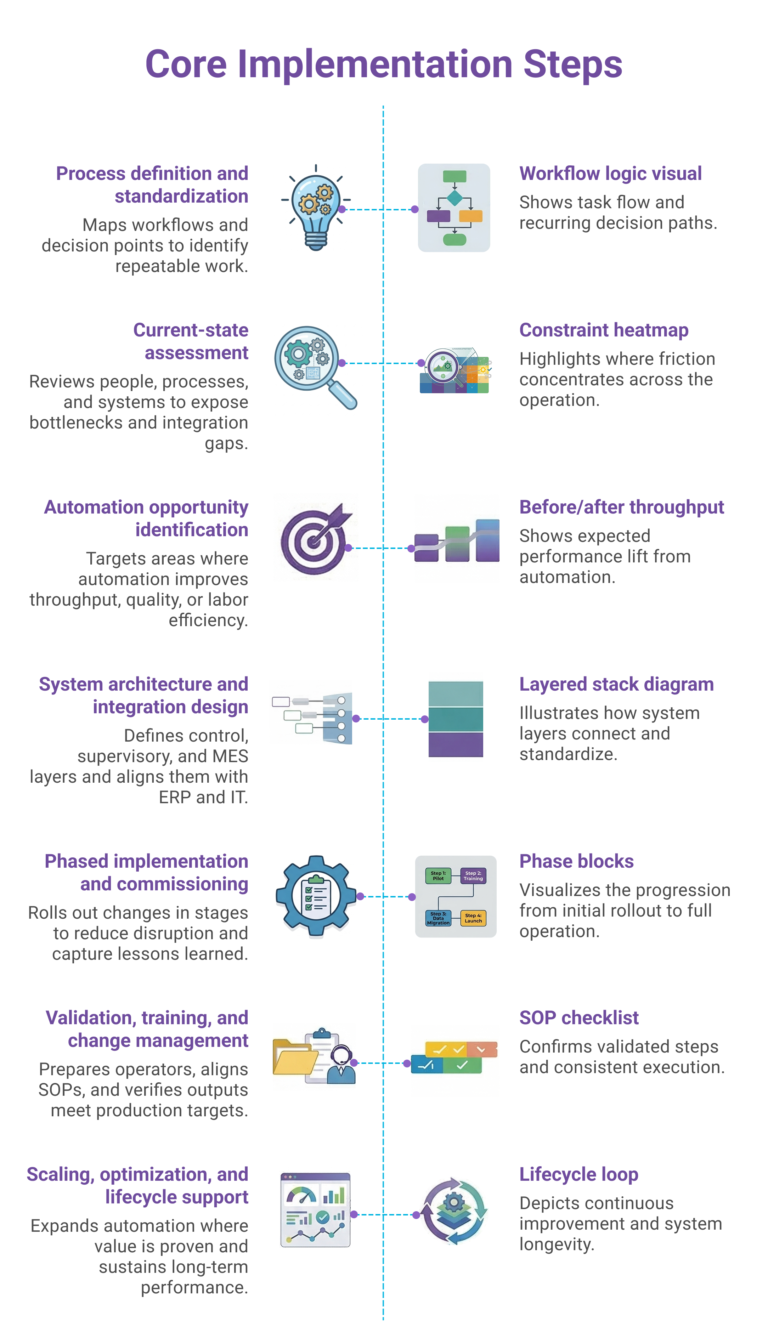
Every plant believes its challenges are unique until familiar roadblocks appear, for example, legacy equipment, siloed teams, inconsistent data, and shifting scope. Identifying these risks early prevents them from derailing execution.
A structured automation roadmap keeps initiatives practical and executable. Automation succeeds when engineering discipline guides each phase, from definition through long-term support.
Without structure, projects drift, budgets expand, and adoption weakens.
Before contacting an integration partner, companies should complete internal process mapping, clarify business objectives, and identify constraints.
Clear performance targets and documented workflows accelerate engineering design and reduce rework.
Organizations that prepare at this level engage partners more effectively and retain stronger ownership of outcomes.
A disciplined roadmap turns automation from a capital expenditure into an enduring operational capability.
Common Roadblocks and Execution Challenges
Even well-planned automation initiatives encounter significant obstacles.
Legacy systems and brownfield constraints often limit connectivity, as older machinery may lack standard interfaces or modern integration capabilities.
Disconnected teams and siloed OT/IT ownership create gaps that complicate coordination and slow implementation. Inconsistent data and unclear naming standards reduce the usefulness of historians and control records, making analysis and decision-making harder.
Organizational resistance can also emerge when operators fear job disruption or workflow changes.
Projects frequently suffer from scope creep, where expanding objectives mid-implementation increases costs and extends timelines. An empirical study of industrial and IT projects found that uncontrolled scope changes consistently correlate with lower success rates and schedule overruns.
Addressing these risks early through thorough assessment, defined ownership, and disciplined governance refines execution outcomes.
Factors That Influence Automation ROI
ROI in automation is not mysterious. It’s largely determined by operational discipline.
Maximizing returns from manufacturing automation systems depends on process maturity and implementation discipline. Well-defined workflows create predictable performance and reduce variability once automation is introduced.
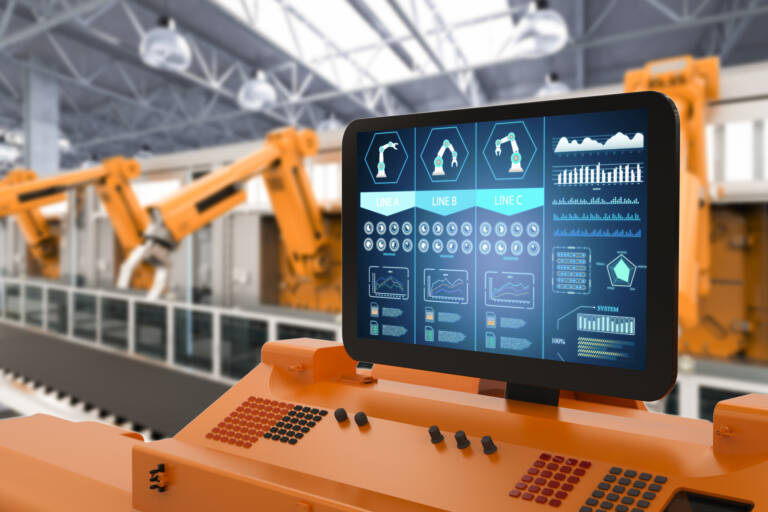
Maintaining scope control and using phased deployment improves adoption and limits disruption.
Operator training and system maintainability are equally critical, ensuring staff can support the system effectively and minimize downtime.
Data quality underpins analytics, reporting, and compliance. Reliable, organized data enables performance tracking and sustained improvement.
When these fundamentals are in place, automation investments produce measurable operational gains.
Designing for Scalability and the Future
Production environments evolve. Product mix shifts, capacity expands, and customers demand deeper traceability.
Automation systems must accommodate growth without requiring full redesign.
Modular, standards-based architectures permit controlled expansion, line replication, and integration of new equipment with minimal interference.
Preparing systems for advanced analytics and AI ensures that high-quality data can support predictive maintenance and performance optimization (MIT Industry 4.0 Research).
Cybersecurity and network resilience must be rooted at the control and infrastructure levels.
Practices in line with the NIST Cybersecurity Framework help protect operations and maintain continuity.
Defined integration between ERP, MES, SCADA, and PLC systems enables plants to modernize incrementally while preserving production stability.
Selecting the Right Automation Partner
Choosing the right automation partner affects implementation success and long-term performance.
Partners with strong engineering depth focus on solving operational challenges.
Manufacturing-domain experience enables them to anticipate compliance requirements, workflow constraints, and production realities.
Robust integration capabilities, including defined PLC and HMI standards and MES connectivity, reduce implementation risk and simplify future expansion.
Ongoing lifecycle support ensures systems remain reliable and adaptable over time.
Companies such as EOSYS emphasize an engineering-first approach. Practical system design, disciplined execution, and deep integration experience enable complex workflows to function reliably without unnecessary complexity.
Preparing Operations for Automation
Technology alone does not resolve operational friction. Coherent processes and defined ownership do.
Prioritizing initiatives based on impact and feasibility, then deploying in organized phases, reduces risk and builds internal momentum.
Working with an experienced partner helps with system integration, operator readiness, and scalable implementation. Moving from concept to execution requires engineering discipline and measurable performance targets.
Plants that follow a structured roadmap achieve stronger adoption, reduced variability, and measurable ROI.
Contact
Your Industry. Your Goals.
Answers That Clarify Your Automation Path
It integrates machines, control systems, and data to execute production tasks with minimal manual intervention. PLC, SCADA, and MES integration coordinate control, monitoring, and operations.
No. Digitization captures data. Automation executes tasks. Optimization improves performance but does not necessarily remove manual work.
Projects stall due to process gaps, unclear scope, or technology-first decisions. Siloed teams and uncontrolled scope expansion also slow progress.
More often, it shifts roles toward monitoring, troubleshooting, and process improvement rather than repetitive manual tasks.
Through improvements in throughput, downtime reduction, quality performance, and data visibility.
No. Phased approaches allow small and mid-sized plants to automate high-impact areas incrementally.
Yes. Defined workflows improve predictability and reduce implementation risk.
Define objectives, map workflows, and identify constraints to enable more efficient engineering and execution.